A suitable commercial filming location supports the scene and gives the crew workable conditions. Before approving a café, office or studio from photographs, test the framing and sound, then review access, setup and filming hours with the location representative. Attractive décor is only part of the decision.
This is a suggested practical guide for brands and production teams, using a fictional café advertisement. It does not describe a MID FILM project or set out legal requirements for a particular location.
Start with the scene you need
Write down what happens on camera: dialogue, a product presentation on a table, or movement between several positions. Decide what the background must contain and what can be omitted. A spacious café may not suit a scene requiring privacy, while a smaller room may work for a static product shot if there is enough working space.
Bring the advertising storyboard to the scout. Test the subject, product and camera positions instead of choosing a room first and then reshaping every scene to fit it.
Test sound under expected operating conditions
For dialogue recorded on location, listen in conditions resembling the planned shoot: air conditioning running, equipment operating and normal surrounding activity. Record a test sentence from the subject’s position and listen through headphones. Check traffic, refrigeration, music and room echo rather than relying on a silent scouting video.
Ask which sounds can be controlled and which will continue. Do not plan around shutting down essential equipment or suspending the venue’s activity without agreement. If the ad uses a separately recorded voiceover, state this in the video ad creative brief so everyone knows what must be captured on site.
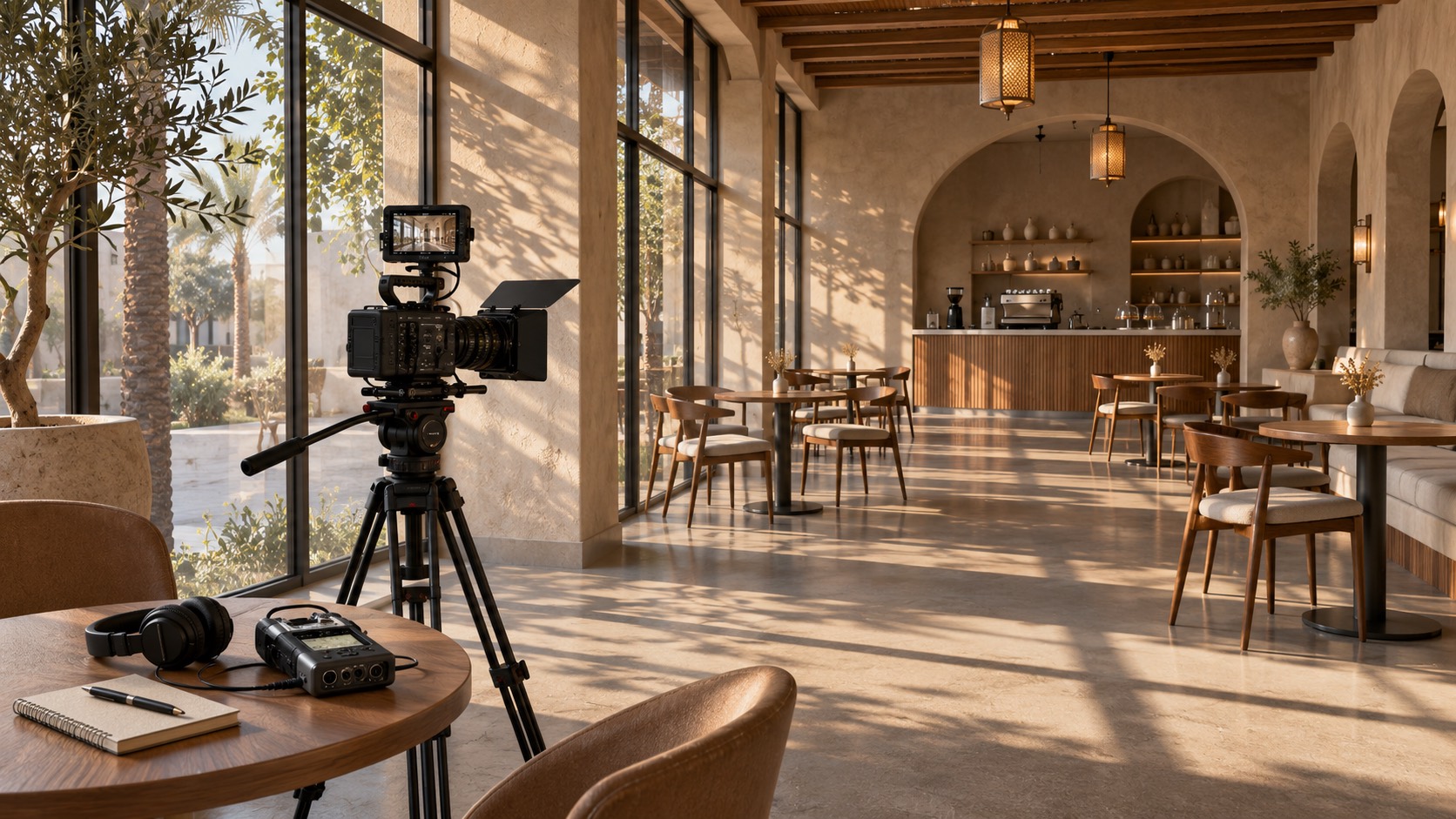
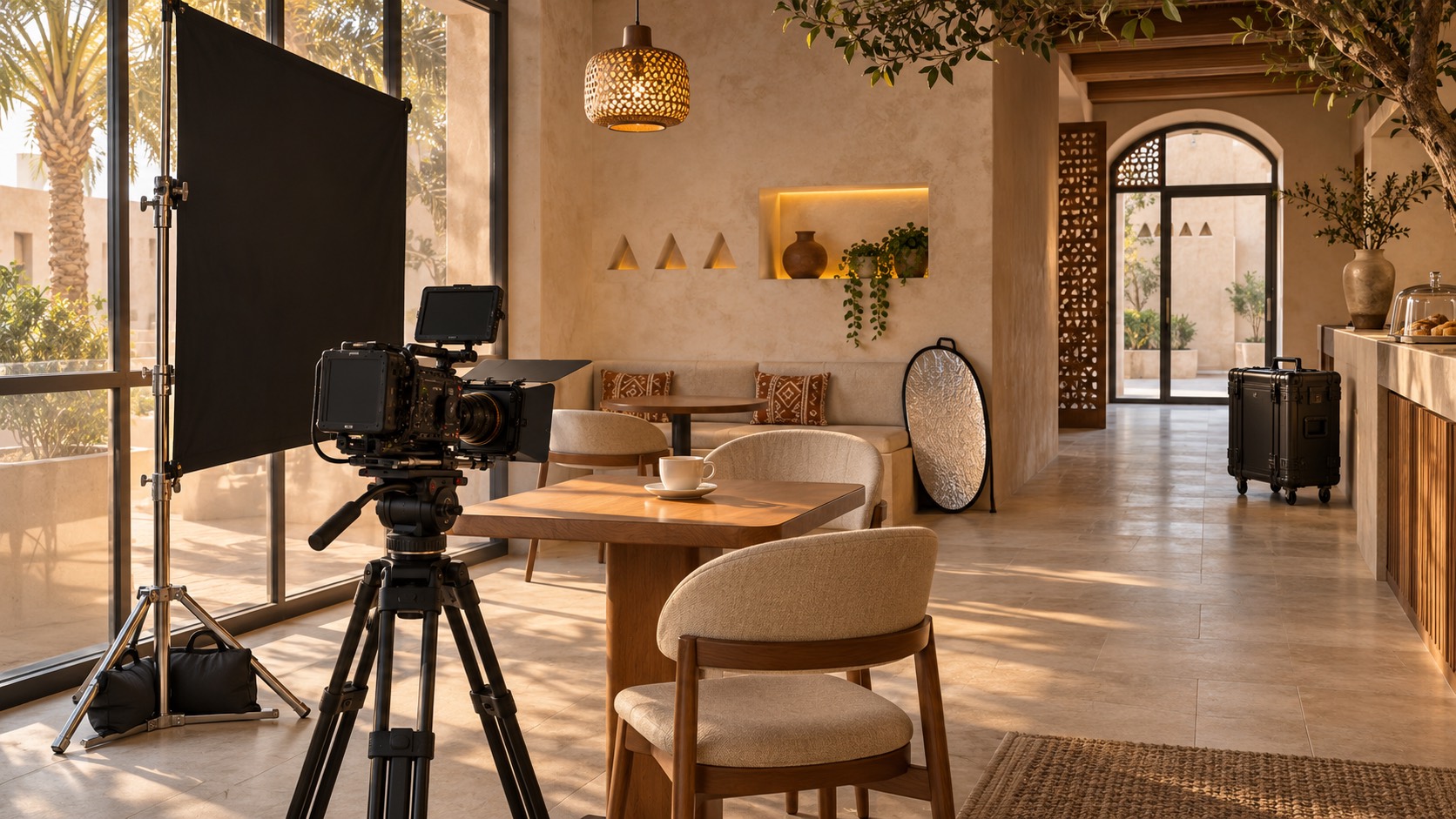
These are AI-generated educational illustrations of a fictional location, not documentation of an actual MID FILM production or filming venue.
Check light at the intended filming time
Record the time of the scout and the window directions, and ask about visiting at the proposed shooting time. A frame that works in the morning may change when direct sun reaches the subject or product later. Test a setup close to the intended shot and inspect reflections in glass, tables and packaging.
Discuss how the cinematography team will manage changes: scheduling shots, controlling a window, having specialists provide lighting, or choosing another angle. A single phone photograph does not establish that the light will remain consistent all day.
Measure working space outside the frame
Check camera-to-subject distance, lighting and sound positions, and crew movement. Confirm that the required angle can be achieved without blocking entrances or passageways. Leave electrical capacity and equipment support checks to a qualified specialist; a visual scout alone cannot approve them.
Review stairs or lifts, unloading access, preparation space and case storage. These details belong in commercial video production planning because they determine how the crew can create the scene, beyond how the venue looks to a visitor.
Clarify location use before booking
Ask the venue representative about access, setup, shooting and reinstatement hours, the areas available to film, and which furniture may be moved. Identify who approves changes and who will be on site. Discuss employees, visitors and visible branding, and check the permissions needed with the responsible parties for that venue and project.
Clarify what the booking includes and any additional arrangements before approval. Permission to use one room does not automatically cover the entire building or everything visible inside it. When comparing production proposals, the guide to choosing a commercial production company can help identify questions the crew should answer clearly.
Example: serving coffee with a short line of dialogue
Imagine an ad opening with a coffee pour, followed by an employee’s line and a product shot. The scout finds a suitable table for the opening, but operating equipment is audible near the dialogue position and visitors appear in the planned background.
Record a decision for each scene: is there a quieter area, can an agreed period be reserved for dialogue, and is the intended background actually available? If there is no workable solution, compare another location or discuss changing the execution. Do not leave the issue until shoot day simply because the coffee shot looks appealing.
Share a scouting summary and test material
Collect angle photographs, the sound test, visit time, agreed use limits and unanswered questions. Assign each open point an owner and a decision date. If both landscape and portrait versions are required, test the angle in both. Defining video ad deliverables before filming helps keep the required uses in view during the scout.
Before the final booking, make sure the crew and venue representative agree on the essential arrangements. To plan an advertisement at your premises or discuss proposed locations, contact MID FILM with the scene idea, location photographs and expected filming date.