Before filming a commercial, it is worth settling one question: are the client and production team imagining the same film? They may agree on the script yet picture different sequences or ways of showing the product. A storyboard makes those decisions visible before the shoot.
The drawings do not need to be polished. They need clear frames and short notes about what we see and hear. This guide develops a fictional coffee commercial to show how to review a board and turn it into a shoot plan. It is an illustrative example, not a real MID FILM project or result.
Establish the message before drawing shots
Write one sentence describing what viewers should remember. In our example, preparing coffee becomes a quiet ritual at the start of the day. This is a proposed creative direction, not a health or product-quality claim. Question any shot that neither supports that mood nor explains the product.
Also agree on the platform, proposed duration, language and action viewers should take. If these are unresolved, begin with preparing a video ad brief. A board visualises an agreed direction; it cannot decide the campaign objective on the team’s behalf.
What belongs beneath each frame?
Give each shot a number, a sketch or planning image, and an action description. Note the shot size, whether the camera is static or moving, accompanying sound or narration, and approximate duration. If text appears on screen, reserve space so the product or platform interface does not obscure it.
Distinguish requirements from suggestions. “The product name must be legible at the end” is a requirement to review. “Move closer with the camera for the transition” may be an option that changes after testing the location. This makes a commercial production discussion more precise while leaving the director room to choose an appropriate execution.
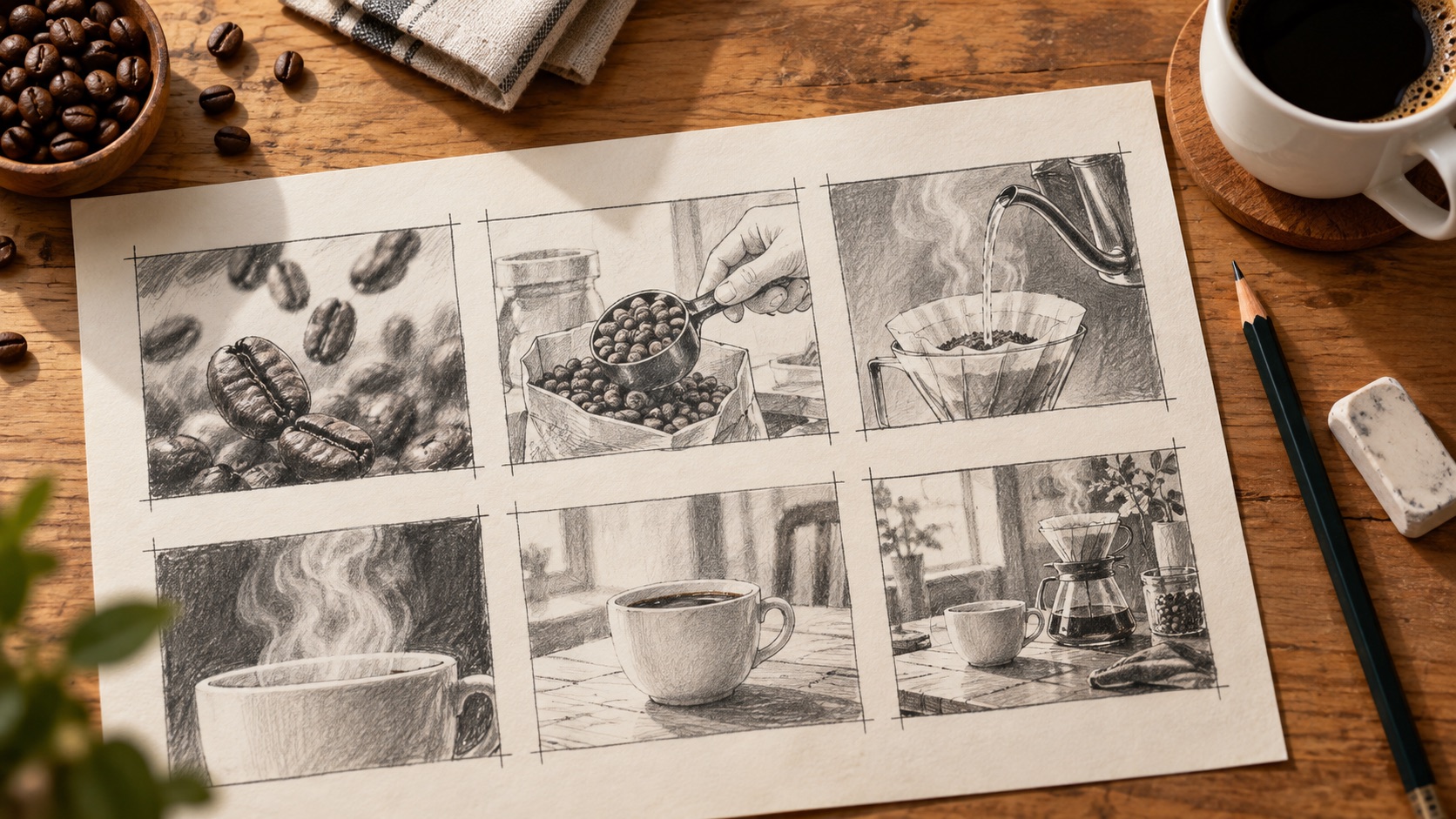
Both images in this article are AI-generated educational illustrations. They do not document a real MID FILM shoot or client project.
Example: a coffee commercial in six shots
Shot one — coffee beans: a close view introduces their texture with a quiet sound cue. Its purpose is to open with a detail connected to the product, rather than an attractive image with no clear relationship to the ad.
Shot two — preparation begins: a hand transfers beans or ground coffee to the appropriate equipment. Keep the process consistent. If the setup uses ground coffee, maintain that choice in subsequent shots rather than introducing contradictory steps.
Shot three — pouring water: show enough of the preparation action to make it understandable, with the pouring sound. Decide what viewers need to see and whether that action still fits a vertical version.
Shot four — steam: a brief detail of the prepared cup moves the sequence from preparation into the quiet moment. Test its duration rather than extending it solely because it looks appealing.
Shot five — placing the cup: a medium shot shows a hand putting the cup on the table. Track the handle position, coffee level and direction of movement so the action connects with adjacent shots.
Shot six — a clear ending: a wider composition combines the cup with fictional, unbranded packaging and space for the brand name, message and next step. Final wording and logos should come from the client’s approved materials.
This is a starting structure, not a mandatory shot count. A short placement may need fewer shots; a message requiring explanation or dialogue may need a different structure altogether. Browse MID FILM’s published work and identify the pacing or product presentation you want to discuss, without copying another commercial.
Test the rhythm before the shoot
Place the frames on a simple timeline and estimate each duration. Read the narration aloud or try temporary sound. Check whether viewers have time to read the text and understand the product. This tests the sequence of the idea; it is not a final preview of lighting, performance or editing.
Test again on a phone at the intended aspect ratio. Is the product clear? Is text within the usable area? Does a landscape composition remain understandable in a vertical version? If the ad needs multiple formats, plan coverage early rather than assuming a crop will be sufficient.
Turn the board into a shooting list
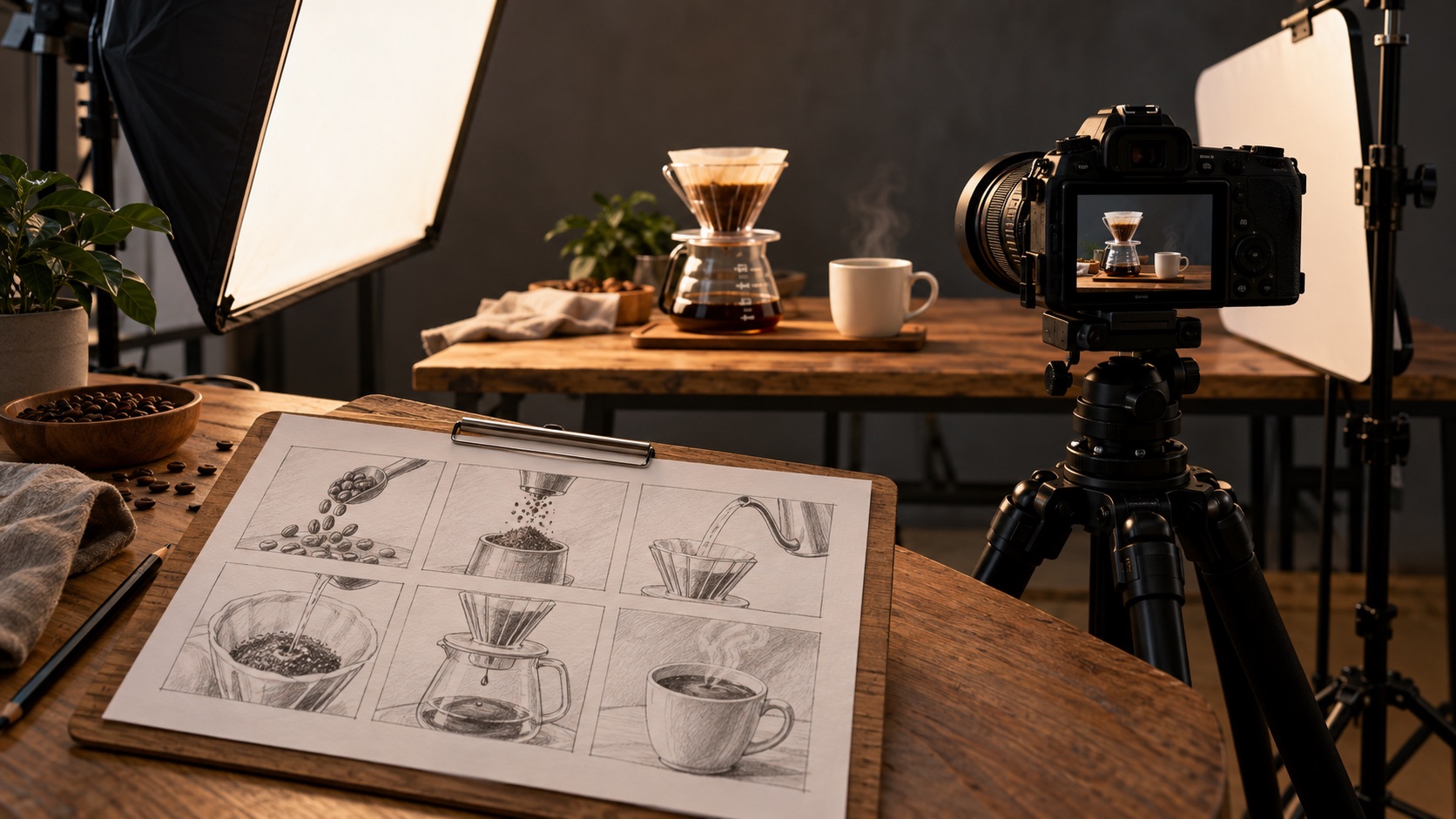
The board follows viewing order. A shooting list organises execution around locations, lighting and available equipment. You might film the ending before the opening to use a prepared tabletop setup, then move to close details. Give every setup a clear reference to its storyboard frame so its purpose remains visible.
Add the required product, props, cup state, sound recordings and the person responsible for approving brand presentation. Connecting concept, filming and editing is part of film production. The board helps coordinate those stages.
When is the board ready for approval?
Review specific questions: is the message understandable? Is there enough product visibility? Is final copy approved? Are the deliverables defined? Does any shot depend on a location, movement or setup that has not been tested? Record the decision and its owner rather than relying on “it looks good”.
Number the board version, date it and consolidate feedback in one file. If the message or deliverables change, establish the effect on scenes and production before filming. Approval still leaves room for creative experiments on set while giving everyone a shared foundation.
If you have a product or service and want to turn its idea into practical scenes, discuss your project with MID FILM. Share the objective, deliverables and timing so the visual approach can grow from the message.